
Do you wake at night to use the bathroom? It is not because you drink too much.
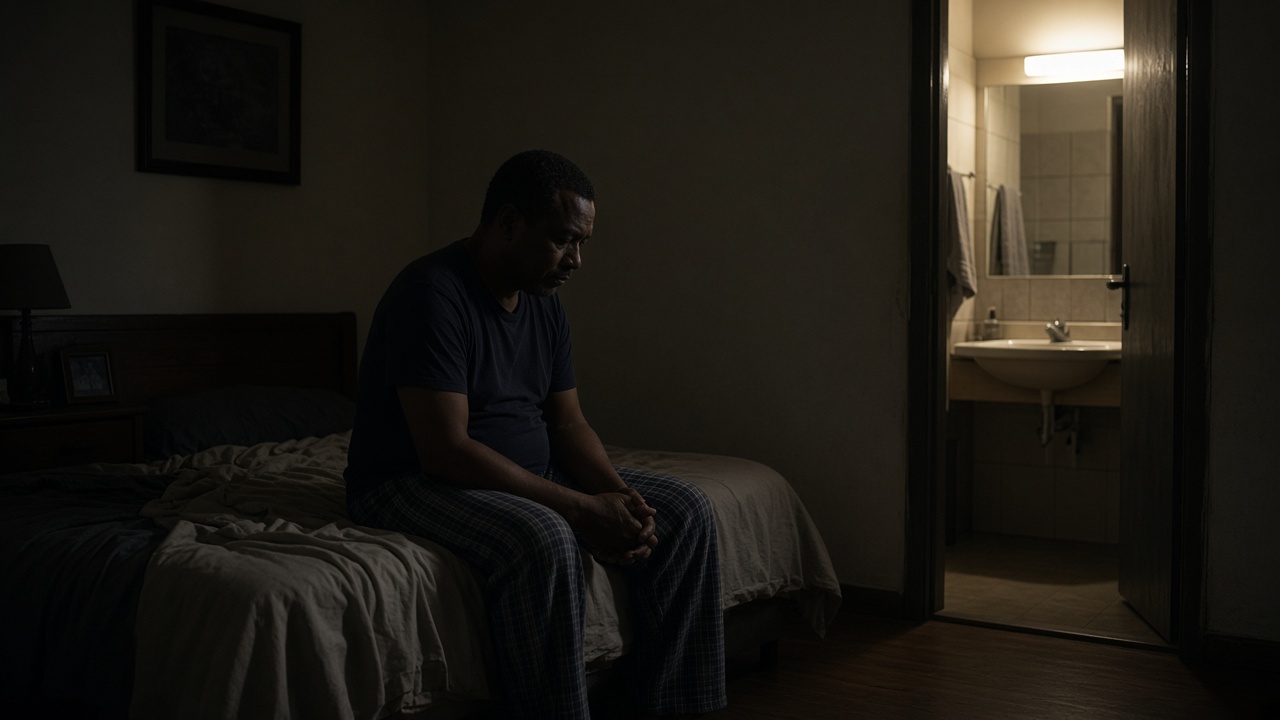
The first thought is always the same: I drank too much. The second: it is age. Both can be partly true and both hide the mechanism urology manuals have described for years. Nocturia — getting up at night to urinate — is not a symptom with a single cause. It is the crossing of habits, the rhythm of the kidneys and what happens to the bladder after forty.
The kidneys do not switch off at 23:00. If by day you drink little and at night you make up with two glasses and a beer, the body shifts diuresis to the night. It is not too much water in general. It is a bad fluid timetable. Urology societies have long advised limiting drinks 2–3 hours before sleep and moving water to the morning and midday.
Caffeine and salt do more than a glass
Coffee after 16:00 works twice: it stimulates and it is a diuretic. Black tea and cola drinks do the same. The salt of supper — biltong, cheeses, chips with the game — holds water in the tissues. At night, when you lie down, some of that water returns to circulation and fills the bladder. You wake and blame the water, even if by day you had two coffees and a tomato salad.
Night alcohol deserves its own paragraph. Ethanol slows vasopressin, the hormone that at night should limit urine production. A lager with the rugby at 21:00 is not only fluid volume. It is a signal to the kidneys: work now.
The bladder and the prostate change with age
In many men from 50 the prostate enlarges. It is a frequent process, almost statistical, not a sentence and not a reason to diagnose yourself on the internet. A larger prostate can make it harder to empty the bladder completely. Then you get up, pass little, and in an hour again. It is not too much water. It is residual urine the bladder did not empty.
Add diabetes, sleep apnoea, blood-pressure tablets taken at night, simply a short sleep. The list is long. That is why this text does not end in a recipe. It ends in a list you can do for a week, before you book — or precisely so you go with concrete notes.
A week of observation, not of panic
- Note the time of the last coffee, the last alcohol and the last glass.
- Note how many times you get up and whether the stream is weak or complete.
- Move 80% of fluids to 07:00–17:00.
- Limit salt after 18:00 for seven days and see if the nights calm down.
- If blood, fever, flank pain or you cannot urinate appear, this is not a chronicle: it is emergency care.
Pelvic floor exercises do not repair the kidneys. They help some men with control when coughing and standing up. A herbal infusion does not replace a check-up. It can replace the third coffee.
Salt versus water: what really fills the bladder at night
The glass at 21:00 is visible. The salt of supper is not. Biltong, chips, cheese and ready sauces hold water in the tissues all afternoon. When you lie down, some returns to the blood and the kidneys. You wake with a full bladder and tick “hydration” off the list, even if by day you drank little and at night you ate too much salt.
For seven days, a simple test: 80% of fluids by 17:00, salt after 18:00 with measure, zero chips with the game. Note the nights. If nothing changes, you have a concrete note for the doctor, not a vague anger at water.
A week example, without heroics
Monday–Friday: last coffee at 15:00. Bottle on the desk in the morning and at midday; after 17:00, just sips. Supper: rice or potato, vegetables, egg or fish, no second helping of biltong. Ten minutes of walking after lunch. To bed at a similar hour.
Weekend: if there is beer, earlier, not until midnight. With the beer, seeds or nuts, not a bag of chips. Sunday night return to the work rhythm, not “one more episode and an infusion at 22:00”.
When to go to the doctor and stop reading
Book if you get up three times every night for weeks, the stream has been thin for months, prostate cancer ran in the family, you are over 50 or 45 with risk factors. Immediately: blood, fever, flank pain, urine retention, unexplained weight loss. A chronicle can order a week. It cannot look at the prostate.
A fluid timetable you can copy
You do not need to weigh every glass. You need a map. On a South African working day, with breakfast at 7 and supper at 19, the map can be this:
- 07:00–09:00: a large glass of water on waking, coffee or infusion with breakfast.
- 09:00–14:00: most of the water. Bottle on the desk, not in the car to “make up” at 20:00.
- 14:00–17:00: the last coffee, if you take it. A glass with lunch. A sip after, not an extra bottle.
- 17:00–21:00: just sips. Herbal infusion if it replaces a cold drink, not if it is the fourth fluid of the afternoon.
- 21:00–bed: a sip if the mouth is dry. Not “one more glass just in case”.
In December and January heat, do not cut morning water to “win the night”. Drink earlier. Air conditioning also dries: a glass mid-morning is not a whim.
What sleep and medicines mix
If you snore, wake with a dry mouth or your partner says you stop breathing for a second, nocturia can be apnoea, not “too much water”. Apnoea alters hormones that at night should concentrate urine. The GP is the first step; not a forum.
Some blood-pressure tablets and diuretics, taken at night, do exactly what they promise: make you urinate. Ask if they can move to the morning. Do not change the tablet on your own. Note the name and the hour in the same notebook as the coffee.
A short, irregular sleep, with the phone at 00:30, worsens all of the above. The bladder is not the only organ that complains at 03:00. If you sleep five hours and get up twice, first order the bedtime. Then look at the glass.
How to talk to the doctor without a vague story
Take seven days of notes, not an impression. A folded paper in the pocket is enough:
- time of last coffee, last alcohol, last glass;
- number of times you get up, and whether the stream is thin, interrupted or complete;
- whether there is burning, blood, fever, flank pain;
- medicines and at what hour you take them;
- whether prostate cancer ran in the family.
That saves the phrase “I just drink a lot”. The doctor may ask for tests, ultrasound or refer you to a urologist. A habit chronicle does not order those tests. It only lets you go with data.
What an infusion will not fix
A cup of herbs at 17:00 can replace a cold drink. It does not empty a large prostate, does not treat an infection, does not lower PSA. Patches are for the skin. The Kegel trainer is a wellness device for seated sets. If it hurts, you stop. None of these products is a diagnosis.
If after two weeks of timetable, less salt and earlier coffee the nights are still the same, do not add another herb. Book. Reading is for knowing what to ask, not for delaying the visit.
More reading: the beer trick, the daily rhythm, night habits and the evening bowl.
The content on this site is informational and concerns daily habits and wellness products. It does not replace medical advice. If you have symptoms, see a specialist.